
Can We Switch the Whole World Economy to Freemium Mode?
As I'm learning about pricing strategies and price models: value-based pricing, cost-plus pricing, penetration pricing, freemium models, tiered subscriptions. And how to evaluate what is the best approach for your product, I got reminded about universal basic income. You can find more info here: What is Universal Basic Income from a Product Manager's Perspective
What got me thinking is this: what if everything was freemium? You get basic food and commodities for free, but if you want something more specific, you have to pay for it with your in-game "coins." How would this work on a daily basis? With new subscription tiers everywhere, I realized we own less and less, so it got me thinking.
What could we do about it?
The Freemium Psychology Applied to Basic Needs
In product management, we know freemium works because of a simple psychological principle: give people something valuable for free, let them experience it, then offer premium features they'll willingly pay for. Spotify gives you music with ads. Dropbox gives you 2GB of storage. LinkedIn lets you browse profiles but charges for InMail.
But what happens when we apply this to bread, housing, and healthcare?
The basic tier would cover survival: rice and beans, not ribeye steaks. A studio apartment, not a three-bedroom house. Public transportation, not a Tesla. It's the minimum viable life; enough to keep you alive, healthy, and functional. The premium tiers? That's where choice, quality, and personalization come in.
This isn't entirely theoretical. We already see tiered systems everywhere. Healthcare in most European countries provides free basic coverage, but you can pay for private insurance to skip waiting lists. Public education is free, but private schools charge premium. Even water, a basic human need, often has a free minimum allocation in some cities, with charges kicking in for higher consumption.
The difference is intentionality. Current systems evolved chaotically. A freemium economy would be designed with clear tiers from the ground up, much like a product manager designs pricing pages.
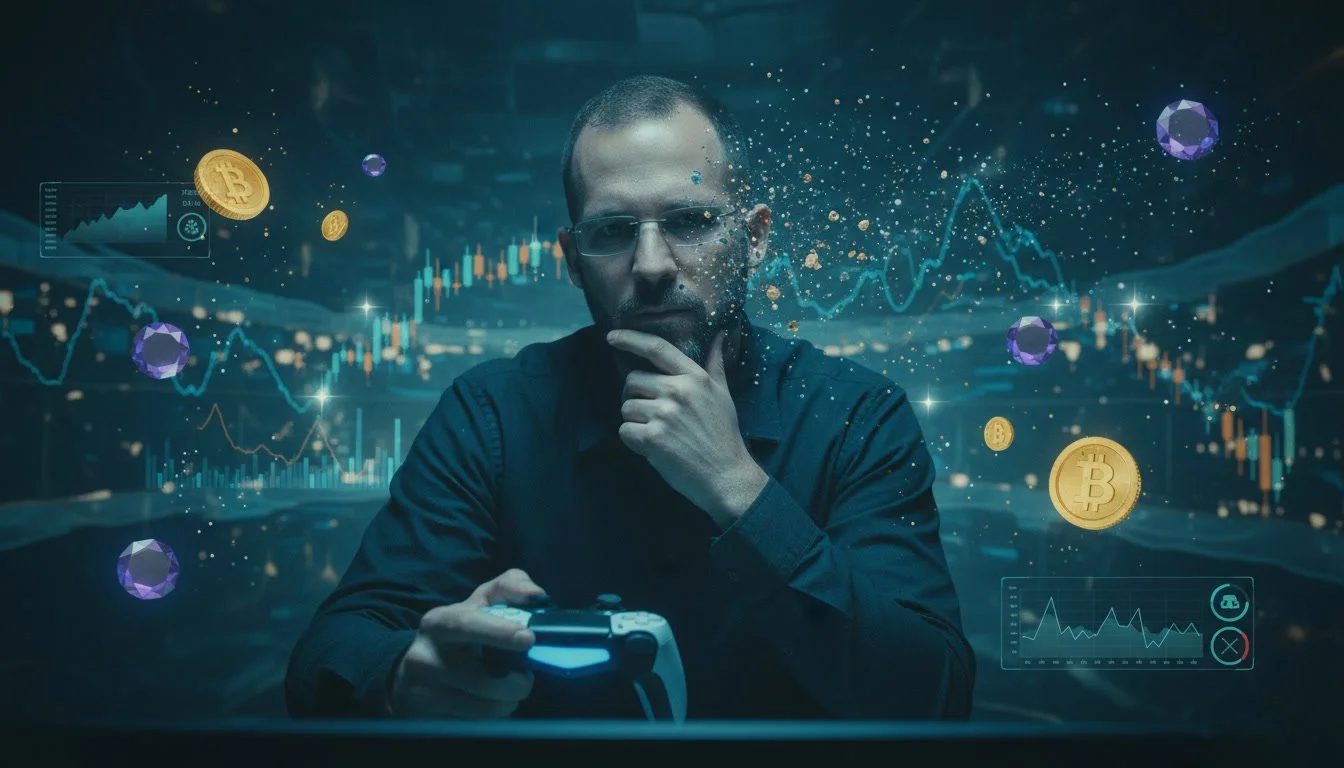
How Gaming Economies Show Us the Blueprint?
Here's where it gets interesting. Gaming economies have already solved many problems we'd face in a freemium real-world economy.
Look at any free-to-play game. Players get basic characters, basic weapons, basic progression completely free. Want the legendary sword? That costs coins. Want to level up faster? That's premium currency. Want exclusive skins? Pay up.
The parallels are obvious. In a freemium economy, citizens would earn "coins" through work, just as gamers earn currency through gameplay. The difference is the stakes. In Fortnite, you lose a match. In real life, you lose access to quality food or housing.
But gaming economies teach us something crucial: people are willing to grind (work) for premium rewards when the basic experience is genuinely functional. The free tier can't be miserable, or people abandon the game entirely. This translates directly: if the free tier of a freemium economy feels punitive, social unrest follows. If it feels dignified, people willingly participate in the economic game to unlock premium features.
Games also show us the danger of pay-to-win mechanics. When premium players have overwhelming advantages, free players feel cheated and quit. In a freemium economy, this means ensuring premium tiers provide comfort and choice, not survival itself. The moment basic healthcare or food security becomes premium-only, the system fails ethically and practically.
UBI as the Free Tier Foundation
Universal Basic Income experiments in Finland and Kenya offer real-world data on how a "free tier" economy might function.
Finland's two-year trial gave 2,000 unemployed citizens €560 monthly with no strings attached. The results? Recipients reported better mental health, less stress, and more trust in institutions. Crucially, employment rates didn't drop; people didn't stop working just because basics were covered. They used the security to take risks, retrain, or find better jobs.
Kenya's GiveDirectly experiment went further, providing entire villages with long-term basic income. Recipients invested in education, started small businesses, and improved nutrition. The economic multiplier effect was clear: when people have a foundation, they build on it.
This is the free tier in action. UBI provides the baseline: enough to survive with dignity. The "premium tiers" (better housing, varied food, luxury goods) become aspirational, not desperate necessities. People still work, but the nature of work changes. You're not grinding to avoid starvation; you're working to unlock better experiences.
In product management terms, UBI converts the economy from a must-have (survival) to a nice-to-have (quality of life) purchasing decision. And we know nice-to-have purchases are where emotional, value-based pricing thrives.
The Practical Implementation Nightmare
Let's be honest. Implementing a global freemium economy would make launching a new SaaS product look trivial.
First, who defines the tiers? In software, a product manager decides what's free and what's premium based on market research and business goals. In a freemium economy, this becomes a political battleground. Is internet access a basic right or premium feature? What about meat? Air conditioning in hot climates? Different cultures would never agree on where to draw lines.
Second, the conversion funnel problem. Freemium products succeed when 2-5% of free users convert to paying customers, subsidizing the rest. In an economy, everyone is already "using the product" (living). Who pays for the free tier? Traditional answers: taxes on premium purchases, wealth redistribution: face the same political gridlock we see with UBI debates today.
Third, preventing exploitation. Free-to-play games constantly battle bots, exploits, and bad actors gaming the system. Scale that to billions of people and you have a fraud detection challenge that makes credit card security look simple. How do you prevent people from claiming multiple free-tier identities? How do you stop black markets in premium goods?
Fourth, the subscription fatigue problem. We're already tired of paying monthly for Netflix, Spotify, cloud storage, meal kits, and software. Now imagine subscriptions for better food quality, housing upgrades, healthcare tiers, transportation options, education levels. The cognitive load alone would be overwhelming. Product managers know that too many SKUs confuse customers and hurt conversion. A freemium economy would be the ultimate SKU explosion.
The Philosophical Shift: From Ownership to Access
Here's the deeper question. A freemium economy accelerates the trend we're already seeing: the death of ownership.
You don't own music anymore; you subscribe to Spotify. You don't own software; you rent Adobe Creative Cloud. You don't own cars; you subscribe to Zipcar or Uber. You increasingly don't own homes; you rent in a market where ownership is out of reach.
A freemium economy makes this official policy. The free tier guarantees access, not ownership. You have access to shelter, but you don't own property. Access to food, but not land. Access to transportation, but not vehicles.
From a product management perspective, this is a shift from one-time purchases to recurring revenue. For businesses, it's brilliant. For individuals, it's potentially dystopian.
The trade-off is security versus autonomy. You'll never be homeless or hungry (security), but you'll never truly own anything either (autonomy). You're a permanent user, never an owner. The world becomes one giant platform economy, and you're always playing by someone else's rules.
This is where the gaming metaphor breaks down. In games, you can choose to stop playing. In life, you can't opt out of the economy. A freemium life isn't a choice; it's the only option. That power imbalance should concern anyone who values individual freedom.
What This Means for Product Thinking
As product managers, we're trained to think about user value, engagement, and monetization. A freemium economy forces us to confront what happens when these frameworks scale to society itself.
It reveals the ethics embedded in our pricing strategies. When we design a freemium product, we decide what's essential enough to give away and what's valuable enough to charge for. Those decisions are usually about features and convenience. In a freemium economy, they're about quality of life and human dignity.
It also exposes the limits of growth-at-all-costs thinking. Freemium products optimize for conversion and lifetime value. A freemium economy optimized the same way would push people toward premium tiers whether they want them or not, through artificial scarcity or degraded free experiences. That's not a society; that's coercion with a pricing page.
But the thought experiment also shows possibilities. If we could guarantee a genuinely dignified baseline for everyone good food, safe housing, quality healthcare, meaningful education, then premium tiers become pure choice. Work becomes optional, or at least optional in its current form. People could take risks, pursue passions, or simply live without the constant grind for basic survival.
The question isn't whether we can switch the world economy to freemium mode. Technically, we probably could. The question is whether we should, and who gets to decide what "free" actually means.
My final thoughts
A freemium world economy is more than a thought experiment, it's a lens for examining how pricing psychology, behavioral economics, and product design principles apply to the most fundamental questions of how we organize society.
The parallels between freemium products and UBI-style economics are striking. Both rely on providing a valuable free tier that creates engagement while offering premium options that generate revenue. Gaming economies already demonstrate how this can work at scale, with earned currency, tiered experiences, and clear value exchanges.
But the implementation challenges are enormous. Defining tiers across cultures, preventing exploitation, managing the complexity of universal subscriptions, and addressing the philosophical shift from ownership to access all present obstacles that make launching a software product look simple by comparison.
Most importantly, applying product management frameworks to society reveals the values embedded in our economic choices. When we design a freemium economy, we're not just choosing pricing strategies, we're defining what human dignity looks like in a free tier and what quality of life costs in premium.
The world is already moving toward subscription-based access over ownership. The question is whether we design this transition intentionally, with human flourishing as the north star metric, or whether we stumble into it through market forces alone. As product managers, we know the difference between good design and accidental complexity. Maybe it's time we applied that thinking beyond our roadmaps.
