
When to Say No to a Stakeholder?
I was reading Gabor Maté's When the Body Says No; a book about how people who can't say no to others eventually have their body say it for them, through illness. It's a heavy and interesting read. But it got me thinking about a question that keeps coming up in product interviews: When do you say no to a stakeholder?
My honest answer is that my strategy has changed over the years. And I'm not sure the old version was wrong, exactly — it was just earlier. I've been thinking through what's actually worked, what I've watched others do, and what I've landed on lately.
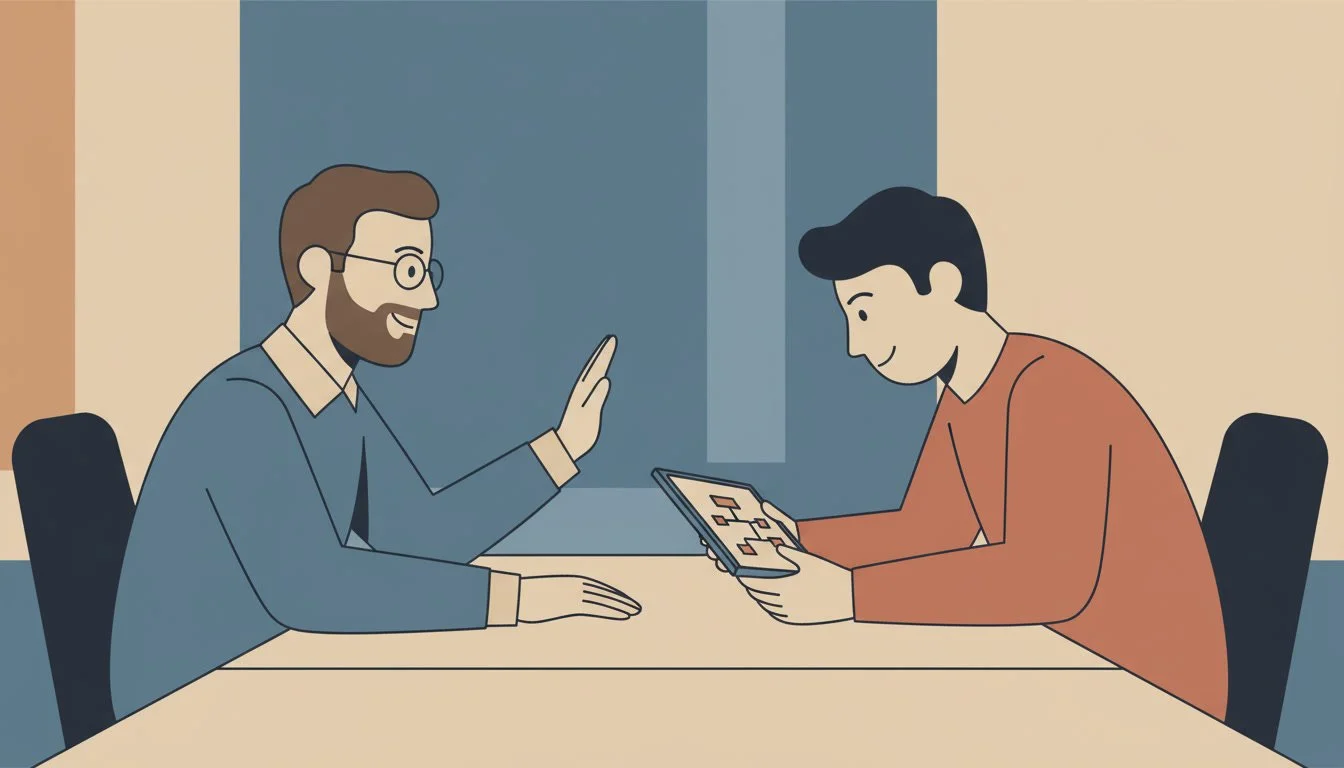
The Direct No
Sometimes it's the right move. Clean, clear, no ambiguity.
The problem is that almost nobody hears "no" neutrally. We all grew up with it meaning something. Parents used it, teachers used it, and it rarely felt good. So even when a direct no is the honest and logical thing to say, the person on the other end might experience it as a door slamming regardless of your intent. Relationships crack that way. Sometimes ones you spent months building.
I also put structured disagreement in this category — not the aggressive kind, but the kind where you say: I hear your point of view, mine is different, and here's why. It's still a no. It just comes with a window instead of a wall.
The Indirect No
I've seen this a lot. More than people admit.
Someone accepts everything in the meeting, nodding, smiling, "absolutely, let's look into that". And then two weeks later the request has just quietly died somewhere in a backlog. No update. No conversation.
A more sophisticated version is drowning the stakeholder in questions until they talk themselves out of their own idea. I've worked with people who were genuinely skilled at this. It can work. But I don't love it. It's still avoidance dressed up as curiosity. You're not being honest — you're engineering someone to arrive at your no while thinking it was their idea.
It's not my style.
Accepting the View, Rejecting the Solution
This is where I am now.
When someone comes to me with a request, I try to assume there's a real need underneath it, even if the request itself is off. I ask questions, but actual questions, not traps. I want to understand what problem they're sitting with, what success looks like for them, what's driving this.
And then I accept it. Not just the words, I mean I actually let it land. I take it seriously. And then I say no. Clearly. With reasons I'm genuinely confident about, not rehearsed deflections.
The test I use on myself: if I were the one being turned down, would I feel heard? If someone really understood my idea and then said "I get it, and I'm still not going to do it because X", I could live with that. I'd probably respect it. That's the bar I try to hit.
What I Found Online
A few frameworks worth knowing:
NVC (Nonviolent Communication): Marshall Rosenberg's approach. The core idea is separating what someone is asking for from what they actually need. Once you respond to the need rather than the request, saying no to the specific solution becomes a lot less loaded.
DEAR MAN: from DBT therapy, of all places. Describe, Express, Assert, Reinforce, stay Mindful, Appear confident, Negotiate. More structured than most PMs need day-to-day, but the underlying logic is solid: saying no well requires both clarity and some self-regulation.
Both point at the same thing. The how matters as much as the no itself.
Final Thoughts
I think saying no is a form of rejection. And rejection giving it, receiving it, is one of the most undertrained skills in professional life. We spend a lot of energy softening the packaging but not much learning how to mean it cleanly.
What changed for me is that I started thinking about how I'd want to be rejected. Not ghosted. Not managed. Just heard out, taken seriously, and told no with a real reason.
That's it. That's the whole standard.
If you can deliver a no where the other person feels understood even if they're disappointed, you've done it right. The relationship usually survives that. It often doesn't survive the other versions.
